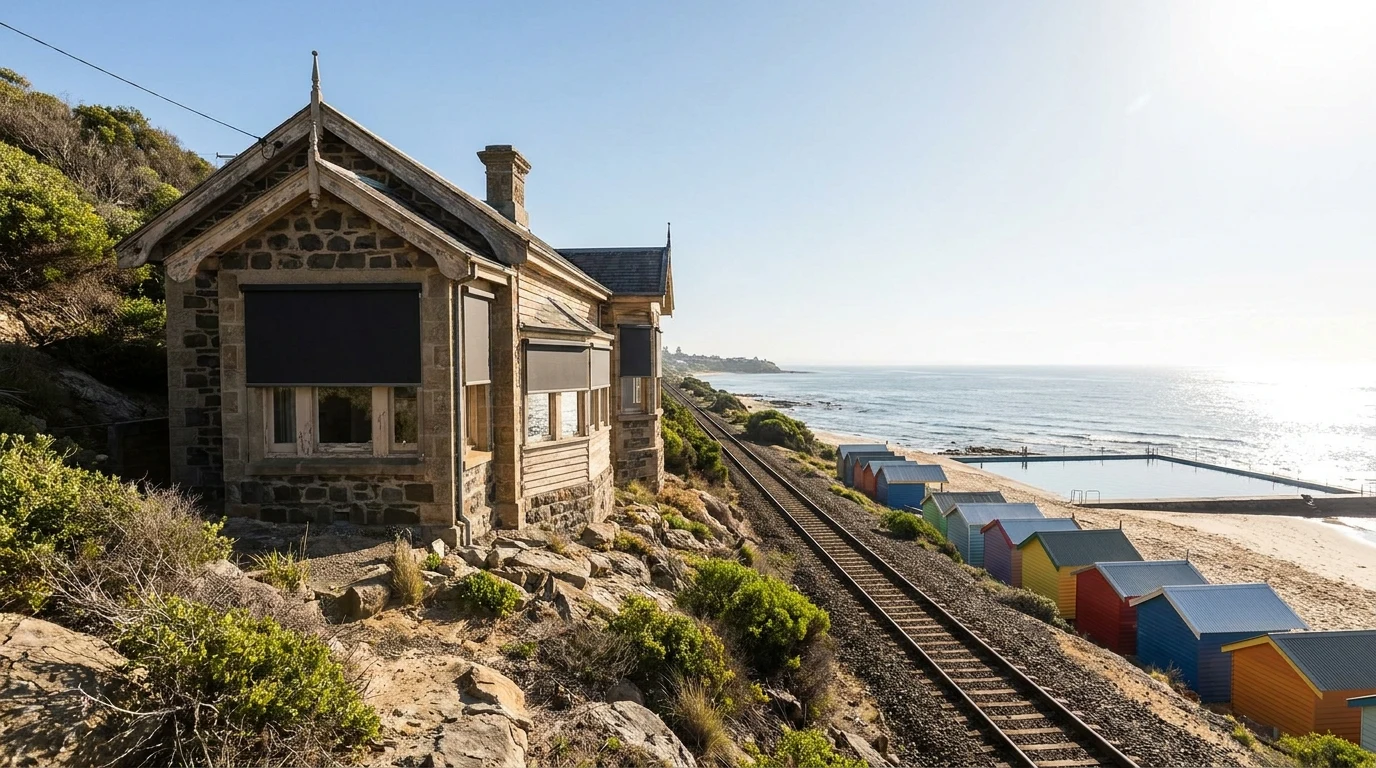
A narrower strip than most
St James faces almost due east across False Bay, squeezed onto a shelf between the mountain and the water that’s barely 200 metres wide in places — the railway line and the M4 coast road both run between most houses and the beach itself. That geography means St James takes the sharpest early water glare of any area we serve on this stretch, and it means trains are a genuine, audible part of daily life this close to the line — a real local fact, never oversold as something a blind fixes.
What’s actually behind the front door
The housing stock along the coast road is predominantly small Victorian and Edwardian-era holiday cottages, many dating from the early 1900s when Southern Suburbs families built seaside cottages here — narrow stands, single-brick or stone construction with limited cavity insulation, timber sash windows, pitched roofs with the occasional gable-end window. Some have added glass extensions to the landward side over the years.
Why sunscreen fabric is the first answer, not blockout
Because the glare hits east-facing glass in the morning at a low angle off the water, it compounds rather than just adds heat — a fine open-weave sunscreen roller blind, roughly 3–5% openness, is the standard first response here, distinct from the afternoon-heat problem an Atlantic-facing suburb solves with a different product mix. Where a bedroom genuinely needs full darkness, a blockout roller does the job instead, and in the glass extensions some cottages have added on the landward side, a tilted aluminium venetian handles the damper, less-ventilated rooms better than fabric does.
The same morning-glare geometry shapes the spec a short walk south in Kalk Bay, where the housing stock is older and the stands narrower still.
Heritage and wind, honestly
Buildings over 60 years old can trigger a heritage review before exterior alterations under the National Heritage Resources Act, and St James sits within areas the City has flagged for heritage character generally — we treat this as a real possibility to confirm on site, not a blanket rule asserted about every cottage. The summer south-easter reaches this side of the Peninsula somewhat less violently than the most exposed Atlantic points, but wind-sensor retraction is still standard practice on anything mounted outside, not an optional extra.